The Shed

The Shed
The Shed
Showing posts with label Leatherface. Show all posts

Thursday, June 21, 2012

THE CHILDRENS HOUR WITH LEATHERFACE - The squash bug

Hi boys and girls its your favorite babysitter and all around cut - up, Leatherface! Boy its going to be a hot one today, isn't it? We'll have cold cuts for lunch! Who doesn't like a nice hand sammige with lettuce and mayo and some cool iced tea? Well gosh darn it we all do!


KINDLY OLD LEATHERPUSS

But today I have to tell you about one of the most insidious, clandestine, persistent, nastiest, butt-ugly destructive scourges ever to plague any garden, with or without a garden shed. 

What Billy? Aunt Agnes? Ho ho, no, close but no cigar. No, we are talking about this little ugly gray insect right here.
 
ANASA TRISTIS, FAMILY COREIDAE; THE SQUASH BUG


Ugly little spud, is it not? And what total havoc this invader creates in the garden. Lets take a quick look. 


Do you like your squash vines to look like this?


Or, like this?


Tough choice, isn't it? Would you like pumpkin pie made from these? 


Or, from one like this?


The problem starts in the fall, when the adult bugs burrough into the garden debris and over winter there. A quick, early and very hard freeze is an ally at this point, and will kill many of them, reducing the problem the following year. A mildf winter however leads to low bug mortality and a correspondingly quick and voluminous start in spring. 

Squash bugs become active in june, just about the time the squash are developing and from that point on, it is all about the squash. Your squash. 

Squash bugs are insect vampires, plunging their proboscis into every vein on the leaves and stems of the plants and eventually into the fruiting bodies themselves. They can collapse the vines and leaves, killing the plant outright and causing the squash to rot.


They have unprotected squash bug sex right on the vines and deposit their distinctive egg cases directly on the undeside of the leaves. Other generations replicate and before long, the squash bugs are out of control and you are looking at a dissapointing crop, if any at all.

WHAT TO DO

Vigilance:

Watch for these little creeps beginning in early June, on the leaves of your squashes, particularly underneath, and by the very base of the plant. Kill every single one you see, and crush every single egg. Start early before the hordes multiply and you have a chance to avoid damage. Spray the vines and leaves with any deterrent containing pyrethrine, these are specially effective vs. squash bugs. Be relentless; a few lax days and you could have squash bugs up the gagootz.

Know when you are beaten:

If you had a bad infestation last year and a mild winter, you might be overwhelmed no matter how fiercely you battle Anasa tristis. Do not hesitate. Get a hot fire going, perhaps in a 55 gallon drum, rip up the vines, squash, bugs, eggs and all and consign them to the flames. Do NOT put unburned squash vines into your compost! The ashes, of course, will be fine.

Toss in all mulch, ground litter etc. where other bugs can be hiding.

This may violate local ordinances; in our view here at the Shed we have an obligation to violate bad law. But follow your conscience on this one. 

If you cannot bring yourself to burn the vines and litter, fill the largest garbage bags you can get with the debris, spray in generous portions of Raid or the like, twist the bag tightly closed with a length of wire and pliers, and give the spoils to Mr. Garbage Man.

Don't mulch:

Heresy I know. We mulch everything in our garden, but not when battling squash bugs. It only gives them a breeding ground and a safe haven. Unmulched plants are much easier to inspect and the bugs easier to catch and kill. Sacrifice sound gardening practice for a season or two to deal with these interlopers, it is worth it in the long haul.

Fall clean up:

Scrape the garden clean, all old plants, all mulch, all fallen leaves, grass clumps; in short anything that could provide shelter for these critters overwinter. Pile it up, and drop a match.  Its good to clean the garden thoroughly in the fall anyway but now you are on a mission!

It is discouraging to have squash bugs show up and steal your prized crops from under your very nose, but they can be dealt with, although it is never easy. Now get outside and check those leaves!

That's it for this segment of the Children's Hour, thank you for stopping by!


Sunday, May 20, 2012

THE CHILDRENS HOUR WITH LEATHERFACE - The Raccoon Mob

Hi boys and girls it's the Children's Hour with your favorite hack, Leatherface! Brunch? Did someone say brunch? Well yes there is a brunch today in fact, we'll be serving eggs Benedict. Should cause quite a ruckus at the Vatican but you can't make an omelet without...well never mind.


Today we will be discussing the raccoon - procyon lotor to science and those who like to show off - one of the tougher adversaries to deal with when trying to grow vegetables in the home garden, at least when that vegetable is sweet corn.


Raccoon depredations can be completely avoided simply by not growing corn, or fruit such as strawberries inside the garden enclosure. While raccoons are the consummate omnivore they are not terribly interested in our tomatoes, onions and broccoli in the raw state. Just cook them up and toss the leftovers in the garbage tho, and magically they become fascinating to the little beady eyed burglars. They will happily redecorate your lawn with the contents of the garbage can.

The fence, of course, is totally useless if there is something the raccoon is interested in, ie. sweet corn or fruit, inside. He, she or most probably, they, can climb anything you can build. An electrified fence is really your only option if you wish to grow corn or berries and raccoons are established in the area. These work very well indeed, raccoons have extremely sensitive paws and hate to be shocked.

Live trapping can work very well if you are facing a single male raccoon or a female who you are certain is not nursing cubs. Re-locate the captured varmint a looong ways off, or like Arnold, they'll be back. Be careful when you do so, you are probably breaking any number of laws.

There is no animal we know of that cares less about commercially prepared deterrent or repellent scents, or for pepper concoctions mixed in the home. You are wasting time and money.    

Except for the occasional lone male, or female between litters raccoons generally come in bunches, called "nurseries". This may consist of as many as eight raccoons as a healthy, well fed female can produce as many as seven viable offspring.

The raccoon method of corn chompery is of the type to guarantee maximum damage. Raccoons like to climb the stalk, sway it to and fro until it cracks under the weight of their fat little bellies and then eat a little bit of each ear before pulling down the next stalk and sampling that one as well. A half dozen raccoons can easily demolish 40, even 50 stalks in one corn fest and even if a little is left over they will be back the following night and so on, until they can scarcely waddle away, they are so full of your tender Silver Queen.


Don't feed them they will NEVER leave if you do!
 Those are your somewhat limited options, remove the raccoon(s) electrify your fencing or don't grow sweet corn or fruit and your other vegetables will be fine.


That about wraps up this episode of the Children's Hour. As always, thanks for stopping by!

Sunday, May 13, 2012

FARM GIRL'S CORNER - How to do the job right in the vegetable garden

Hi its me Farm Girl! I help Uncle Mac in the garden and around the shed and things like that. You know, a lot of folks don't know how important it is to maintain a clean environment when gardening. Seeding pots that are not cleansed season to season, or tools between usings can spread disease from plant to plant and bed to bed, from one season to the next!

A dirty hoe can spread Verticillium Wilt before you can say Jack Robinson!

Did you say "Jack Robinson"?

See how quickly that can happen?

Well today I was keeping everything nice and tidy. Mac did some weeding, and then I cleaned his tool. He transplanted some seedlings and I made sure that tool was spotless! Then he poked in some seeds and I polished his dibble like it's never been polished, if I do say so myself. Old fool probably won't wake up until late afternoon tomorrow at best!

But I'm here today to link you to a positive plethora of valuable articles on how to get things done in the garden. With no further ado:


Do you love fresh juicy watermelons? And not just watermelons but cantaloupes and honeydew melons, and all the sweet exotics that have become available in recent years? This little guide will help you grow melons that your neighbors will envy! Just click HERE:


Do you like Lima beans? Pole beans, peas, cucumbers or gourds? These are a few of the many veggies that would climb a trellis willingly and benefit from the climb. A trellis can be as simple or as ornate and complex as you like but if you are a gardener you are going to need one or more. Some thoughts on trellising, right HERE:


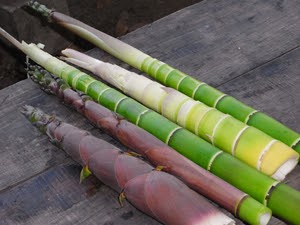
You too can grow your own edible bamboo; yes its true, and many do. Our Asian brethren and cistern know how tasty this exotic side dish can be. You do, however need to take a few precautions because when cyanide is involved, well, bad things can happen. Tips for growing this unusual, delightful and delectable addition to the western garden are spelled out for you, right HERE:


Do you believe in minding your P's and Q's? Here at the shed we pretty much tend to ignore Q's except during scrabble-thons or words with friends. P's, or more accurately, peas, have our undivided attention. And what do peas want to be productive garden denizens? A little sun, a bit of compost, some nitrogen fixin' bacteria and water. AND good neighbors! To find crop enhancing companion plants to bolster your pea patch, simply click HERE:


Somewhere on this ball of rock hurtling through the void there might be a serious gardener without a compost heap to his or her credit. I've never met one, and don't actually wish too. Compost is probably the single most important component in a successful garden plot. Moderating PH levels, improving tilth, attracting earthworms, providing nutrients, forming a superior mulch; compost does all of this for the gardener, and more.

There are of course right and wrong ways to go about composting. Let Glory Lennon, award winning author of "Glory's Garden" teach you the correct way to go about it. She does so right HERE

Onions, everyone seems to like them, and they can be used in so many ways. But have you ever wanted to grow a truly ginormous onion? One that stops browsers in their tracks at the county fair? Well here is a blueprint for success in gigantic onionry.

There are however a few updates since the original article was written:

Ailsae onions are no longer as rare as once they were, both plants and seeds are now widely available in the US.

The admonition about mulching with grass clippings remains true - however a mulch composed of well aged sifted compost made by the "hot" or "fast" process to kill all weed seeds is highly recommended.

Following these instructions will result in large onions indeed. The Brits, who apparently care about such things, stress that to grow a potential world record breaker strictly controlled green house methods alone will get the job done. For the rest of us the great outdoors is just fine:

With that out of the way, for humongous onions, click HERE

Not satisfied with taking home the blue ribbon for biggest onions? You want the tomato award as well? Let us see what we can do to help you out. Just click right HERE:  


Hmmmm. Someone seems missing from the usual cast of characters here at the shed today. Who could it be? I'm here...Leatherface is cutting firewood...Delacroix is cleaning that big ass rifle...Uncle Mac, passed out on the hay bales, snoring. Kinda sounds like a chain saw with a bad carburetor, doesn't he? Jack is researching a "Dead from the Shed" post. Aunt Agnes - why is Aggy still here, anyone? Hmmm? Well anyway Aggy is getting herself outside of a quart of Jack Black.

The critters? Dire and Nero are trying to imitate nice dawgies...Mrs. BobKat is sleeping in the rafters...Blinky scooted past with a dead chipmunk just a few seconds ago...Oh I know! No Clem! No garden worth its parsnip should be missing Clem! Clem who? Clematis of course. Here once again is Glory with the Queen Clematis story.


Pole beans or bush beans, that is the question. Here at the Shed we love 'em both and grow both types every year. But for the first time gardener there may well be good reason to go with bush beans. We are happy to give you our two cents worth about that, right HERE!


So you've built your raised beds, added rich garden soil and compost, is there anything else that could make this splendid situation even better? Of course there is! Simply invite about a thousand of your best gardening buddies and helpers, the earthworms. Let us tell you why, right HERE!


Well there you have it! A wealth of information at your finger tips, do with it what you will. Until next time, and as always, thank you for visiting Farm Girls Corner! 

Tuesday, May 1, 2012

THE CHILDRENS HOUR, WITH LEATHERFACE - An appeal for help!

Hallo everyone, its your favorite cut up and baby sitter Leatherface! Usually I run little educational snippets for the kiddies on how to control garden pests and other things but today, I've asked all the parents here because we are having trouble with an old nemesis that we really have had little success controlling in the past. We thought someone might have a helpful suggestion. Help yourself to the beans, weenies and fixin's on the sideboard before we get down to biz here.

Whats that, Mrs. Quackenbush? Nathan's weenie? Well one might have been a Nathan it's so difficult to keep track over the years.


Know your varmint: Here she is folks, the bane of our existence here at the shed. We don't who she is, because we can't catch her to ask so we just call her Pineapple Girl. I can tell you, this is about the only glimpse of her we ever get, scooting around a corner - she's abnormally quick for a short little woman - usually with our best pineapple in her mitts and a goofy grin - well represented here I think - on her face.

Once she scoots around a corner she disappears completely, not even footprints left behind, or a scent for the wolves to pick up. This leads us to think she has found at least one of the worm holes in the garden (not the ones made by our slimy little garden allies) which makes her more difficult to contend with than say, hungry raccoons which although undoubtedly clever little beasts are not noted for their ability to manipulate space-time.

Yes, question, Mallory? How do we manage to grow pineapples here in North Jersey? We like
pineapples, my friend. And we are gardening wizards after all, aren't we? Have another weenie?

Live traps don't work, electrified fencing doesn't work, predator pee - well I leave it to you. Dusts, sprays, CD's on string, pah! She sneezes at them.


Uncle Mac says she can't outrun a bullet but, despite the bizarre trophies he brings home now and then, I don't see him loading the ol' Springfield.

She doesn't confine herself merely to pineapples; eggplant, butternut squash and Kossack kohlrabi seem to be on her list as well. She snatched our biggest Burgermeister Grande termato last summer on a dead run, just as farm girl was about to pick it! A two legged scourge!

We that's it for today, folks, put your heads together and see if you can help us solve the Pineapple Girl Mystery, you might win a valuable prize! (If you consider 10 lbs of Uncle Mac's Special Compost valuable, that is.) As always, thank you for visiting here at The Children's Hour!

Friday, April 27, 2012

THE CHILDREN'S HOUR WITH LEATHERFACE - Mrs. Deer

Hi there boys and girls it's your favorite cut up and babysitter, Leatherface! It's a really nice spring day today, not too early for a barbecue and so I got a few packages of ground Ron out of the freezer last night. It's burgers for lunch kids!


But today I'm here to talk about that sweet grazing ungulate, Mrs. Deer, and all her herd mates and the adorable deer children, and all the unbridled havoc they can commit in the garden.


Mrs Deer
Look at that sweet face! Such a face! Guileless, gentle, wholesome and...HEY WAIT A SECOND THAT FACE IS FULL OF MY COLLARDS! PASS THE WINCHESTER, FARM GIRL!

No no no! This is overreacting. You cannot possibly blow away every deer that invades the chard patch. And why would you want to, - except for that distressing habit they have of spreading tics and with them, Lyme Disease. Mrs. Deer is nearly as easy to control as Mrs. Bunny, and with no violence at all required. (Unless you like venison with your collards, of course)

Build a fence! This is always part of the answer, you cannot have a vegetable garden in a rural environment without a fence. And for Mrs. Deer, as with Mrs. Bunny, chicken wire is adequate.
Three feet, however, is not. You want a minimum of eight feet for deer, and it is far, far better to go with 10 feet.

Hey, there is benefit as well. Fencing makes terrific trellis material. Your beans and cukes will be deeply appreciative of the tall trellis.
If the wire is tautly strung and the fence is well maintained, this will keep Mrs. Deer on the outside looking in with no need for electrifying the fence. But fail to build it, and trust me, they will come, dinner napkins in place. In that case, you may have a somewhat less edifying view of Mrs. Deer.

By the way, it seems the people producing predator urine products are not pleased that we never recommend them. Well, if they definitely worked, 100% of the time, we would, but they do not. Even if they were effective, rain washes the scent away and weakens any deterrent value that they may have. Gardeners are at fault, failing to keep the deterrent fresh. And eventually the hungry critters do figure it out. It may smell like T-Rex whiz around the eggplant, but there isn't a Rex in site. And kiss the corn goodbye.


GUILTY AS HELL
That's it for now! As always, thank you for sitting in on The Children's Hour!

Saturday, April 14, 2012

CRITTERS WE'D LIKE TO SEE IN THE SHED

Looks like old Leatherpuss has been telling you folks how to deal with pest animals amidst the veggies. Looks like he's fixin' to drag it out, one critter at a time, maybe get 5 -6 more posts out of it. This is what I get for letting just anybody wander by the shed. 

I'll deal with those pests in one paragraph. Have pests? Build a fence. Have big pests? Build a bigger fence! Do the pests climb the fence? Electrify the fence, and if none of that is effective, shoot the pest!

There, wasn't that easy? Wait until you see the multi page epic Leathermug turns it into.

But there are some critters that you definitely want hanging around the shed, wolves and the like although opinions vary on that. This endearing little fellow on the left is one such, and folks in the Southwest probably know him well.

Those who do not, meet Bassariscus astutus, also known as the ring-tailed cat or miner's cat. Ring-tails are of course not cats at all but are procyonids, which means they are closely related to raccoons as their striped bushy tails

might lead one to suspect. They are tiny creatures compared to raccoons, their body size somewhere between that of a large grey squirrel and a small domestic cat. They also lack the boldness and sheer gall of their raccoon cousins, are almost entirely nocturnal and tend to shy away from humans and their domestic livestock and pets.

However, their essentially mild dispositions and extremely curious nature make them relatively easy to befriend if obtained young, and even older ones will acclimate well to people if treated properly. They make wonderful, entertaining pets once they get over their 

initial shyness.

Well, ok, but why would we want one or two living in the garden shed? Because they eat the very things we want to get rid of, bugs, spiders and rodents of all varieties. They do a much better job than the average fat and lazy house tabby, and can go places where wolves simply do not fit.

The miners and ranchers who moved into the old west recognized this fact and made haste to make friends with the little creatures, going so far as to build them houses from packing crates, placed near enough to the stove to provide warmth. The nickname "Miner's Cat" gives some indication of the prevalence of the practice.

If there is one downside to inviting ring-tails in, it is that their curiosity and climbing skills mean that they are constantly into everything. But hey! It's the garden shed, do we really care?

 All right we have the Southwest covered very nicely, what do we have for Northeastern sheds? We are way out of ring-tailed cat territory and they wouldn't like it up here in the north, anyway they prefer rocky desert environs.

Fortunately we have ermines, or stoats, or big old weasels if you prefer, and if there is one thing that ermines like better than killing and eating a rodent, its killing and eating a bigger one. They are even better at it than the ring-tails.

Stoat, ermine or weasel the scientific name is Mustela erminea. Ermine is a stoat in its fine white winter coat, summer 

garb is brown on top and white beneath.

Only 12" long not counting tail the stoat is ideally designed to go into rodent burrows after its prey. It favors mice, voles, rats, chipmunks and will kill squirrels and rabbits larger than itself when need be.

Unlike our little ring tail-friend, stoats are not cuddly pets. A few have probably been tamed from time to time but nipped fingers, which after all look like a plump and juicy mouse, are always a possibility.

Stoats go where the rodents are, and that can well be sheds and barns. They do an excellent 

 job of controlling these offensive and crop destroying vermin and are therefore always welcome at Uncle Mac's.


Vida Guerra's anti-rodent potential at this time is neither known nor relevant, but we can't help but feel that there is room for her in the shed.

Perhaps as a roving reporter, interviewing other shed dwellers, or perhaps the critters, or why not? Perhaps she can interview the vegetables themselves.

"This is Vida Guerra live from Uncle Mac's corn patch, where today we'll be interviewing a Country Gentleman corn stalk. Pardon me, Mr. Stalk, but could I have a few moments of your time?"

"I'm all ears, Vida."

"No, really, I need a new agent. This crap has to stop!"


Vida, really, wearing actual ermine hides where Mrs. Stoat can see them!

You take those off right now young lady!


Well OK! That wraps this extravaganza up for now, thanks for visiting Uncle Mac's garden Shed!

Wednesday, April 11, 2012

THE CHILDREN'S HOUR WITH LEATHERFACE - The Woodchuck

Hi boys and girls and welcome back to the Children's Hour with your favorite cut-up, Leatherface. A D.A.R. tourist bus slid into the ditch out by the main road so we'll be having lady fingers at snack time today, isn't that nice?


Last time we were discussing garden pests and we touched on Mrs. Bunny, a gentle soul who is easily dissuaded from consuming the prized veggie crop by the simple expedient of erecting a 3 foot tall poultry wire fence. That won't do us a bit of good with the next member of the rogues gallery, the all too common ground hog, woodchuck, or Chuck the Destructor as he is known is some gardening circles.


Look at this critter! A fat, affable fellow by the look of him, but never forget, he's a rodent! A really big rodent but like his close relatives, squirrels, rats and members of Congress all he wants to do is eat, screw, and steal your stuff. Particularly all that delicious broccoli, cauliflower, collards, well actually, just about everything you were planning to enjoy with your family and friends.

That 3' tall wire fence will not get it done. Chuck can easily dig under it, and will do so with single minded efficiency. If you set wire into the ground to deter him, it needs to be at least 18" deep and that is a real chore. The wire will also deteriorate rapidly. Thus thwarted Chuck, who is a better climber than you would give him credit for, will simple swarm over it.

Chuck expends a lot of energy digging his burrow, and can not easily been driven off. There are all sorts of varmint repellents, usually predator scents of one type or another like wolf or coyote urine, they may have a temporary deterrent effect but Chuck is hungry, and not stupid. He may smell essence of concentrated tiger balls but he knows full well there is no concentration of tigers. And there go your carrots.

Realistically, you have three choices when faced with a determined ground hog. You can live trap and remove him, you can put him down, or you can electrify the fence. 

Live trapping is simple, chucks will willingly enter a properly baited trap - fruit is popular - but there may be a problem. Some states have laws against its citizens moving wildlife about, since the government obviously knows better than you do what the nature of the problem is. In that case, some folks might take Chuck for a long ride into some other part of the country and release him anyway, but do it at night. Find out what the rules are in your state and let your conscience be your guide.

A .22 long rifle bullet is perfectly sufficient to relocate Chuck to the big chard patch in the sky, but again, there are concerns. Is there room, given the layout of your property and that of your neighbors, if any, to allow for a safe shot? Are you a good enough shot to kill Chuck humanely? 

You'll ideally want to place that bullet either between the eye and the ear, viewed from the side, or right between the eyes head on. There is no benefit in merely wounding the fat fellow. 

And of course you'll wish to take the law into consideration, and whether or not to bend it.

The electrified fence works very well indeed, and has the added advantage  of deterring several other categories of garden pests. However, even if you can scrounge some of the materials and do the work yourself, it is not an inexpensive proposition, and the larger the garden the larger the cost. 
Chuck is a tough customer with a hearty appetite, and you may have to make a tough choice if you wish to enjoy the fruits of your gardening labors.

That wraps it for now, thanks as always for stopping by for the Children's Hour! 

Saturday, March 31, 2012

THE CHILDRENS HOUR WITH LEATHERFACE - Knowing the enemy

Hi boys and girls and welcome back to the Children's Hour with your favorite cut-up, Leatherface. Well I finally found out why that durn old chain saw wouldn't run, there was an ear ring jammed in the turning mechanism again! I wonder how the heck that keeps happening, I guess it's just one of life's little mysteries...


Another of life's mysteries is how to get a bumper crop of vegetables out of the gardens we've worked in so hard when so many of mother natures critters are bound and determined to get to them first. Here is the first contender from our rogues gallery of furry - and occasionally feathered - adversaries, and a tip or two on how to deal with their ilk.

Mrs. Bunny

What is cuter than a bunny? Not many things are; they are innocuous creatures for the most
part, a welcome sign of spring,

a pleasant sight on the lawn in the morning and evening. But in the garden, well perhaps not as welcome. The stereotype of Bugs Bunny with a carrot in his paw is not far from the truth, Rabbits love carrot tops and Mrs. Bunny and her adorable brood can saw an entire carrot patch level with the ground in just a few unguarded hours.


They also like the foliage of many other garden plants, cucumber and squash vines and their leaves being right on the top of the list along with all varieties of greens.

Fortunately, and unlike most of the marauders on the list, it is not terribly difficult to deal with

bunnies. A 3' tall 1 inch poultry wire fence will defeat them. They can dig underneath but rarely will, and setting the baseboards at the bottom of the fence even a few inches into the ground will discourage even the most enterprising carrot lover. 

Ignore the various sprays, scents, live traps etc. that are available, you will need a fence anyway, and a well maintained fence will keep a sorrowful Mrs. Bunny on the outside, looking in.

Yes Kids, rabbits are one of the few garden pests that we can happily co-exist with, because they are so easy to deflect. But be sure to stop back for the next edition of The Children's Hour when we encounter a totally different kind of adversary in the form of Chuck the Destructor...

As always, thanks for stopping by!

********************************************************************************************

Before you go why not visit with Amycita, who gives us some of the soundest gardening advice that I can remember: http://www.firefliesandtunacans.blogspot.com/2011/03/never-impale-your-foot-on-garden-rake.html, or with Mandy at Mandy's Pages, a breath of fresh air for all of us who write or aspire to do so: http://www.mandys-pages.com/