The Shed

The Shed
The Shed
Showing posts with label garden. Show all posts

Wednesday, January 30, 2013

Free seeds - Hubbards, Butternuts and more from the seediest people around...

NOTHING AS BLEAK AS A WINTER GARDEN

AND THE WINNER IS...

MR. DAVE LYONS! CONGRATULATIONS!

Mr. Lyons I will need a mailing address so please e-mail same to BobMacNJ5@aol.com and we will get your seeds right out to you!

My thanks to all who participated, new contest soon!


But cheer up! Better days are coming! Onions and corn will sprout, turnips and carrots will frolic in the mulch and egg plant will dance a sprightly dance amidst the chard! Well maybe not. But things will grow again, rest assured. And to help this along Uncle Mac's has a few seed varieties for you, absolutely free.

These are our own seeds, saved from our own garden harvest.

You will get:
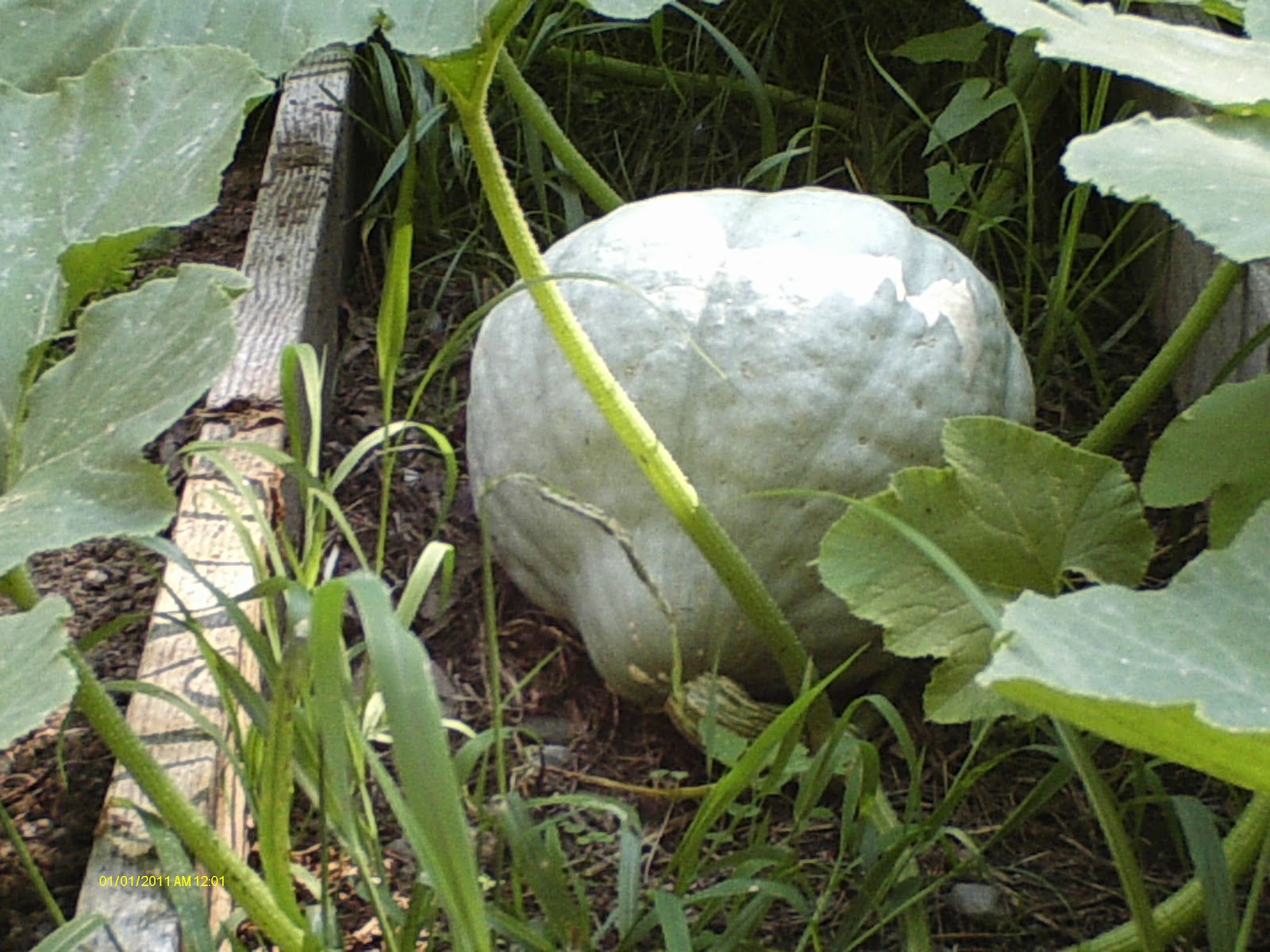

24 Blue Hubbard squash seeds, enough to generate over half a ton of Hubbards if you plant them all. The great hulking brutes can be used like any winter squash or pumpkin and will store for months with care.  


Blue Hubbards make wonderful pies!


But wait, there's more!


You will get some BUS seeds too. (Butternuts of Unusual Size)


Ladies Knight cucumbers, sure to please.


Red bell pepper seeds...


And three other varieties of veggie seeds as well, we'll let those be surprises.

"What, kindly, grizzled old Uncle Mac must we do to win these seeds?" You may be asking.

Nothing at all. Just indicate in the comments section that, yes, you would like to be in the drawing and when the time comes, (February 15, 2013) we will hold some kind of drawing, (paper slips from a bowl or hat, likely.) and YOU, gentle reader, could be a winner!

And there will be much rejoicing!

Remember, just indicate in comments that you want to be in the drawing for the free "Seeds of Resistance" package, that is all.

Good luck!

Don't forget to check back on the 15th or 16th to see if you won, Farm Girl will need a mailing address!

Friday, October 5, 2012

FARM GIRLS CORNER - The baby Boules

Hi there turnip lovers, its me Farm Girl and you know me by now. I help out around the Shed and Garden, and assist Uncle Mac when he needs it. Today I collaborated with him on a "Hay Stack Compression Test" apparently gathering valuable information to help us prepare for the Winter months. It seemed a lot like the other hay compression exercises we perform all year long, but I digress.

F.G. AS EVER WAS


The Boulle D'or or yellow turnip patch is developing nicely, as you might expect, since the sow date on  August 17.

LUSH, THICK GREENS

Little turnips have formed to the point that they will switch into over drive very shortly, and grow visibly almost by the day.

AIN'T HE CUTE?

But you are really here to check on Mr. Big, are you not? Well here he is. Mr. Big and his kin suffered a devastating attack of young caterpillars but sprays and hand picking seem to have got them all over the hump.

MR. BIG AT HOME
Sticking with his "inch a week" program Mr. Big is now 20" in circumference, which means we have a whole lot o' baga going on.

I'M READY FOR MY CLOSE UP NOW, FARM GIRL
This fine fat fellow has at least three weeks before a serious frost event should occur, so we don't expect to be inviting him for dinner anytime soon. In fact, we're thinking of keeping him hanging around until Thanksgiving, if things should work out that way.

I think we've gotten to the root of the matter for now, so until next week, thanks for stopping by!


Saturday, September 29, 2012

FARM GIRL'S CORNER - The Boules of Bashan

Hi! Farm Girl here with a few slack moments in which to give you all an update on the progress of our Boule D'or (yellow) turnips as they wend their inexorable way toward our cooking pots.

GETTING A TAD CHILLY FOR THIS LOOK
And here are our little jaundiced prizes as they appear in their 7th update photo, at the conclusion of their 6th full week of growth. They were sown on August 17th.

THICK, LUSCIOUS YELLOW TURNIP GREENS

You can see how densely packed the leaves are, so much so that we will be trying a pot full of yellow turnip greens tomorrow. While we don't really expect a noticeable difference in flavor from the greens of the ordinary white turnip it certainly is worth a try.

Not doing so well are the leaves of the Brussels sprouts in the foreground (flea beetles suspected). These received a good dose of pyrethrine which we expect will sort the situation out in short order.

And of course the weekly report would not be complete without a few words on every one's favorite fatty, Mr. Big, our own prized rutabaga.

EXPANDING LIKE THE NATIONAL DEBT, MR. BIG
Mr. Big is now a full 19" in circumference, putting his diameter at a stately 6" or so. Normally you don't want rutabagas getting any larger than this as they begin to get woody and tough beyond this point. But, since we want to see just how large this fellow will get before the first frost we intend to let him keep growing.

Also, the woody portions may always be cut out, and if the weather conditions are optimal - and they have been - even a large rutabaga may remain tender throughout. 

That about wraps up the boule and 'baga report for this week, as always thanks for visiting us here at Farm Girl's Corner!


Today's Farm Girl Model, Jamie Eason

Photographer, Johnny Crosslin

More of Miss Eason and Mr. Crosslin's remarkable work can be seen at:


We highly recommend a visit to the site!

Wednesday, September 26, 2012

Root crops in the fall

Not everyone knows the secret of root crops in Autumn. Farmers do of course and veteran home gardeners as well, but the casual home gardener may not . Let's set that to rights right now.

The secret simply is that most root crops, grown as a matter of course in spring grow better, heavier, tastier and more disease and damage free growing from the warm days of late summer into cool and even cold weather.

RUS - RADISHES OF UNUSUAL SIZE

A -HAH Uncle Mac, you mendacious old rascal some might say, you are holding yonder overblown radishes a foot in front of a very small pepper to inflate their size, not to mention egos.

No, scoffer, I might reply, those radishes are touching what is in reality a reasonably good sized bell pepper. These are common "French Breakfast" variety radishes but they exceed their Spring grown brethren by a considerable margin both in volume and crunchiness.

The same is true of beets, kohlrabi, turnips of all varieties, and rutabagas. (Which is often called a turnip but actually is not.) Carrots grow well although not necessarily bigger and will overwinter in situ if cared for properly. Parsnips fairly cry out to be grown until the first frost at least, it greatly enhances their flavor. They also overwinter well.

A PRIZE RUTABAGA IN AN EARLY STAGE OF DEVELOPMENT

One of the nice things about fall root crops is many can be kept not just in the ground but in the home as well to provide a food source all the way into early spring. The rutabaga shown above is an excellent example of a long keeping fall root crop.

It is almost certainly too late in most zones to plant a successful fall crop - with the possible exception of radishes - but you now have all winter to plan your "second season" garden for next year.

As always, thank you for visiting Uncle Mac's.

We hope to see you back soon!

Saturday, August 11, 2012

ITS NUCLEAR ITS CUKLEAR!


"Howdyyyyyyyyyy! Aunt Agnes here and I'm fit to bust I'm so dawg gone happy! I jist picked me some "Ladies Knight" cucumbers from the trellis outside the shed and would yew jist look at these bad boys? Ridin' in on a white charger to rescue a damsel in distress on a quiet Saturday night!"


.

"WOOO - HOOO! Why this reminds me of the time..."

"AGNES!! Excuse me ladies and gentlemen, Farm Girl here, sorry to interrupt but really...Aggy have we told you that this is a serious gardening blog and that you are not to go posting things we don't know about every time you find a radish that looks more radishsy to you than the general run of radishes? Well have we?"

"Yes, but - "

"In fact have we told you not to post at all?"

"Yes but gosh dern it - "

"As a matter of fact did we not have Leatherface drag you out by the scruff of your scruffy old unwashed neck last time you were Aggying on about a tomato and half a dozen spuds? Did he not tie you to the old oak tree, thereby spurring Uncle Mac to decompose a horrid doggerel song parody that haunts us still and is apt to appear on Helium until they notice it and take it down? Did he not furthermore smear you from bowsprit to mizzenmast with honey and leave you there for Mr. Bear to find?"

"Ah kinda liked the honey slatherin' it reminded me of my girlish youth -"

"AGNES! You know darn well those 'cumbers aren't called "Ladies Knight", there are no cucumbers called "Ladies Knight" and whatever road you were going down with that, well lets just say I'm glad I caught you in time! A woman your age? What are we supposed to do with you you're a bigger pain in the butt than even Pineapple Girl and Uncle M is seriously considering shooting her!

"Well - "

"Well me no wells!"

"Again, Constant Readers, we beg your pardon. Be sure to check back in a few days when I believe Jack has a new episode of "Something Dead from the Shed". Should be a lot of fun, unlike..."

"Well never mind. This is Farm Girl and, I'm very much afraid, Agnes. 'Bye for now!

Tuesday, July 10, 2012

FARM GIRL'S CORNER - Fall cabbage

Hi! Farm Girl here! I help out a lot in the garden and around the shed and what not. Today I almost helped Uncle Mac a bit more than necessary. There I was, plucking a few stray weeds from the corn patch when I here him bellowing:

"Farm Girl!" Have you seen my pole?"

Good grief, I thought, you mean since breakfast? The old boy's been into the fenugreek again. But when I looked around I saw that he was holding his tackle box and net and looking puzzled.

"In the ammo room, Mac," I told him, "Aggy put it there."

And off he went to drown a few worms.

But today I'd like to tell about the fall crop we're about to put in, green cabbage. A bit early, you may be thinking but no, not in zone 5 where our garden is located.

To grow fall cabbages successfully you of course, need a place to plant them. Cabbages make a great follow up crop in a bed where radishes have been, or peas but beware planting after cauliflower, broccoli or kale; or any other veggies of the brassica genus. Members of this group share the same nutritional requirements and the second crop will suffer as a result.


We selected the heavy duty "Megaton" cabbage, a giant cabbage which happens to be extraordinarily tasty, and which stores well.

Megaton is a widely available variety, our seed happens to come from the Jung Seed company.

As it happens we let a raised bed lie fallow (no spring crop) until it was Megaton time. All we did in spring was turn the bed, work in a lot of compost, some wood ashes and a goodly amount of bone meal. (Cabbages are heavy feeders and particularly fond of phosphorus, hence the bone meal boost.)

We gave the bed a shallow turn over and raking every few weeks to knock down the weeds but otherwise left it alone.

Now, at planting time, we worked in a bit more compost and directly sowed the seeds into the bed. Megaton is a big, rambunctious cabbage and we like to give each one a full square yard in which to grow. As these huge brassicas can top 20 lbs in weight, this is not a waste of growing space.

It is important to mulch the seedlings as soon as they are big enough to tolerate it, preferably with sifted compost but if not, with grass clippings. They will benefit enormously from the cooling and water retention that mulch provides during the hot spells that are bound to occur in August and September.

Megaton cabbages take 90 to 100 days to mature after germination, be sure to water regularly and deeply, they are thirsty veggies.

A side dressing of "Superphosphate" or the like would not be amiss halfway through the growth cycle, particularly if you are trying for an eye popping, blue ribbon giant.

And that's about it for...What the heck??


Leatherface! NO!! You may NOT make your "world famous" stuffed cabbages! You remember all the trouble that caused the last time! Take that child back to wherever you found him right this minute!

Now he'll mope for a week.

Anyway that's the story with fall cabbages here at Farm Girl's Corner! As always, thanks for stopping by!   


Saturday, June 30, 2012

Garage and rummage sales yield unusual gardening tools


Hi its Aunt Agnes agin' stoppin' by with some quick info!

Ya know, nobody ever uses "Uncle Mac" and "genious" in the same sentence but the man occasionally demonstrates a low form of animal cunning. The sort you see in salmon fer instance, when somehow they return unerringly to their home rivers when its spawnin' time, or in the humble woodchuck who never fails to find the right hole. I understand that the latter skill set is actually beyond Uncle Mac when he's in his cups but of course that's just hear say.

But what...

[ Editors note: Just making the observation that a man who can manipulate space-time without making fatal errors cannot be a complete idiot! ]

[ Farm Girl's rebuttal to the editor's unwarranted intrusion into Aggy's post: "Wanna bet?" ]   

Erm? Are ya'll done buttin' in?

Anyway I wanted to tell you about the unusual but useful and CHEAP tools Mac brought home from the rummage sale t'other day.


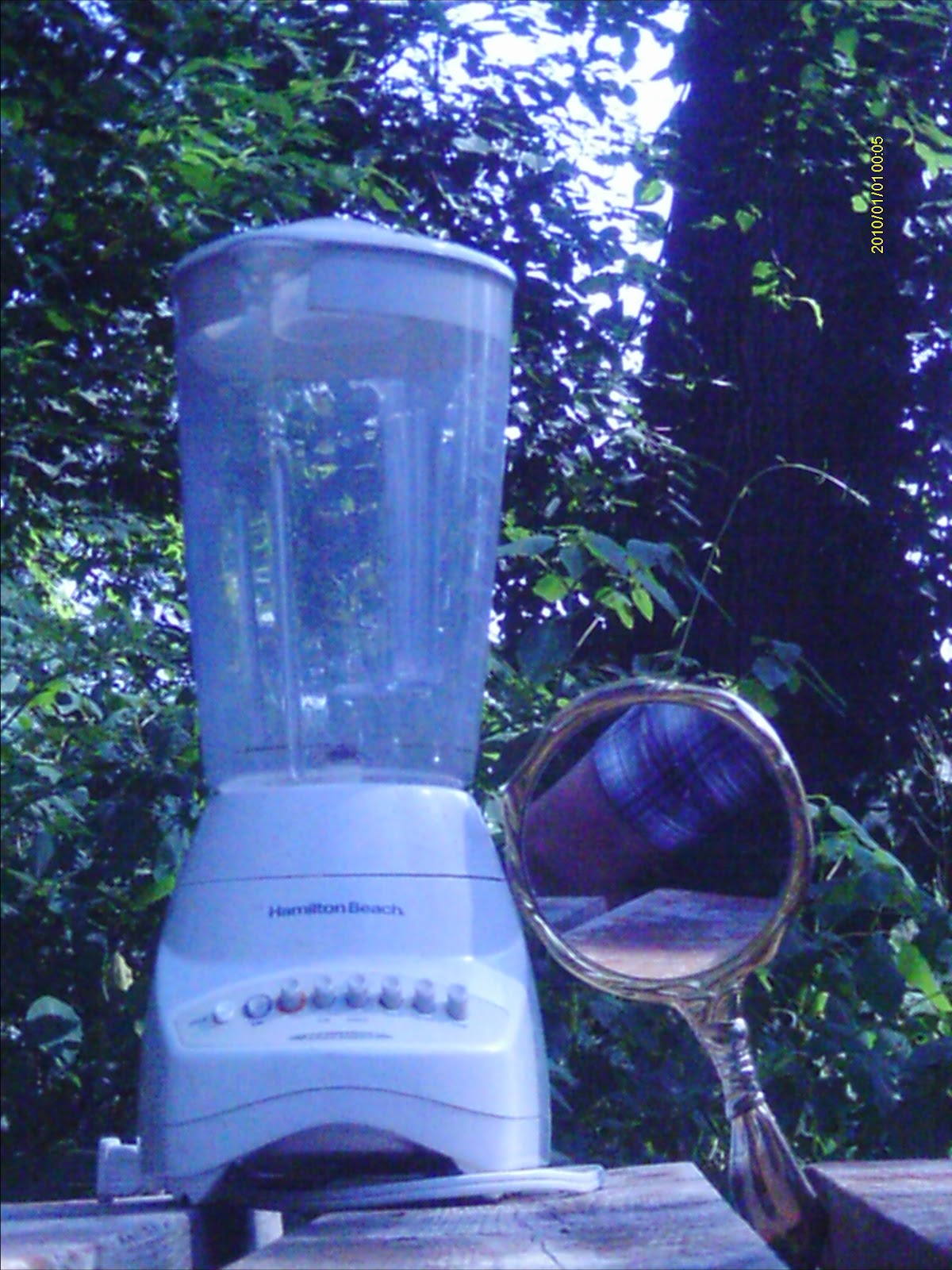
Oh I know whatcher thinkin'! Its a blender and a Granny mirror! What in the wide world of sports are we gonna do with those?

Well, first of all, we are gonna put dryed egg shells in the blender and reduce them to powder, along with just a wee bit of epsom salt. This, if we are unimaginative makes a nice side dressing for plants that we wish to dress, sideways.

But, if we chuck in room temperature water we can make a nice calcium magnesium shake to pour right on the mulch covering our plants roots! 

Of course we have to shake the hell out of the container to make sure the calcium does not precipatate to the bottom, y'all know how intractable calcium can be.

And then Uncle Mac makes us all pina coladas in that blender! They are crunchy and taste like a dose of salts but hey, there's an s-load of rum and what might actually be coconut in there, lets not offend the old buzzard.

"Did you clean this blender before you mixed drinks?", Farm Girl asked one time.

"Course I did."  said the antique lyin' sack of organic fertilzer.

That leaves the Granny mirror. 

What's on yourn squash? Squash bugs!


Where do they lay eggs? Under the leaves.


How do y'all find these nasty bastids? Y'all look under the leaves.

What is the easiest way on both the gardener and the plant to do so? With a mirror.

Well there y'all have it, Uncle Mac blunders into something useful, make of it what ya will.

This is Aunt Aggy, Have a festive 4th of July and thanks for readin'!


Sunday, June 24, 2012

FARM GIRL'S CORNER - The seediness of Uncle Mac, Part 2

Hi there, you know me its Farm Girl, I help out (as in, do most of the mundane gardening work) around the Shed and in the garden and so on. You know how seedy a guy Uncle Mac is, seems he can't find enough places to deposit seed. But I digress...


Every once in a while in the course of what we like to call "doing research" ie., "making shit up" we come across a factoid or blog or website that deserves promoting. And we found one, and we need to give them all kinds of credit and a plug as well. But first, a picture, which we have determined is not worth a thousand words, but only 914. But you know, close enough.


What is THIS, you may ask, and who can blame you?
Its called "Petrowski's turnip" named after the famous Petrowski and it has the distinction of being a quick growing biggish yellow turnip that tastes nothing like a white turnip, not that there's anything wrong with that, of course.

You can get it from the folks at "Real Seeds" just by clicking on the link. We'll be buying a few packets tomorrow, still plenty of time for a fall crop of these beauties in our zone. (5 - 6) 

But that turnip, interesting as it is only scratches the surface. This company has many heirloom seeds, (in fact, they have no hybrids at all), many of which will be new to US gardeners.

This includes a white turnip big as a dinner plate but let's not hold that against them.


Real Seeds also tells you how to save your own seeds for next years planting, and people, if you take nothing seriously from our blog listen to this, we all have to learn how to do this and we need to learn fast. Monsanto is coming. And it ain't gonna be pretty. (See related article HERE)

We have saved squash, cuke, tomato and pepper seeds here at the Shed for some time but now we are going to branch out. Use Real Seeds info as a jumping off point and you can do so too. Hey, its fun and you can swap with your friends!

And that's it for Farm Girl's Corner, enjoy those yellow turnips and thanks a bunch for stopping by!   

Thursday, June 21, 2012

THE CHILDRENS HOUR WITH LEATHERFACE - The squash bug

Hi boys and girls its your favorite babysitter and all around cut - up, Leatherface! Boy its going to be a hot one today, isn't it? We'll have cold cuts for lunch! Who doesn't like a nice hand sammige with lettuce and mayo and some cool iced tea? Well gosh darn it we all do!


KINDLY OLD LEATHERPUSS

But today I have to tell you about one of the most insidious, clandestine, persistent, nastiest, butt-ugly destructive scourges ever to plague any garden, with or without a garden shed. 

What Billy? Aunt Agnes? Ho ho, no, close but no cigar. No, we are talking about this little ugly gray insect right here.
 
ANASA TRISTIS, FAMILY COREIDAE; THE SQUASH BUG


Ugly little spud, is it not? And what total havoc this invader creates in the garden. Lets take a quick look. 


Do you like your squash vines to look like this?


Or, like this?


Tough choice, isn't it? Would you like pumpkin pie made from these? 


Or, from one like this?


The problem starts in the fall, when the adult bugs burrough into the garden debris and over winter there. A quick, early and very hard freeze is an ally at this point, and will kill many of them, reducing the problem the following year. A mildf winter however leads to low bug mortality and a correspondingly quick and voluminous start in spring. 

Squash bugs become active in june, just about the time the squash are developing and from that point on, it is all about the squash. Your squash. 

Squash bugs are insect vampires, plunging their proboscis into every vein on the leaves and stems of the plants and eventually into the fruiting bodies themselves. They can collapse the vines and leaves, killing the plant outright and causing the squash to rot.


They have unprotected squash bug sex right on the vines and deposit their distinctive egg cases directly on the undeside of the leaves. Other generations replicate and before long, the squash bugs are out of control and you are looking at a dissapointing crop, if any at all.

WHAT TO DO

Vigilance:

Watch for these little creeps beginning in early June, on the leaves of your squashes, particularly underneath, and by the very base of the plant. Kill every single one you see, and crush every single egg. Start early before the hordes multiply and you have a chance to avoid damage. Spray the vines and leaves with any deterrent containing pyrethrine, these are specially effective vs. squash bugs. Be relentless; a few lax days and you could have squash bugs up the gagootz.

Know when you are beaten:

If you had a bad infestation last year and a mild winter, you might be overwhelmed no matter how fiercely you battle Anasa tristis. Do not hesitate. Get a hot fire going, perhaps in a 55 gallon drum, rip up the vines, squash, bugs, eggs and all and consign them to the flames. Do NOT put unburned squash vines into your compost! The ashes, of course, will be fine.

Toss in all mulch, ground litter etc. where other bugs can be hiding.

This may violate local ordinances; in our view here at the Shed we have an obligation to violate bad law. But follow your conscience on this one. 

If you cannot bring yourself to burn the vines and litter, fill the largest garbage bags you can get with the debris, spray in generous portions of Raid or the like, twist the bag tightly closed with a length of wire and pliers, and give the spoils to Mr. Garbage Man.

Don't mulch:

Heresy I know. We mulch everything in our garden, but not when battling squash bugs. It only gives them a breeding ground and a safe haven. Unmulched plants are much easier to inspect and the bugs easier to catch and kill. Sacrifice sound gardening practice for a season or two to deal with these interlopers, it is worth it in the long haul.

Fall clean up:

Scrape the garden clean, all old plants, all mulch, all fallen leaves, grass clumps; in short anything that could provide shelter for these critters overwinter. Pile it up, and drop a match.  Its good to clean the garden thoroughly in the fall anyway but now you are on a mission!

It is discouraging to have squash bugs show up and steal your prized crops from under your very nose, but they can be dealt with, although it is never easy. Now get outside and check those leaves!

That's it for this segment of the Children's Hour, thank you for stopping by!


Sunday, June 17, 2012

SOMETHING DEAD FROM THE SHED - Meganeueropsis permiana

Hello again everybody Its me, Jack, back from a trip to me old haunts in White Chapel. I've a smile on my face, a song in my heart, blood stains on my neck tie and surgical steel in my carryall.

A man has to touch base with his roots, from time to time.


NOT A DRAGONFLY BUT A REAL FLAME BELCHING FLYING DRAGON - ITS A LONG STORY...
Today on "Something Dead from the Shed" we'll be touching on the subject of giant dragonflies. No, not just a big bug from the back yard, but specimens larger than some surveillance drones. (Would have been hard times for Jackie if the coppers had drones in their bag o' tricks back in 1888, hey?)

We actually had a pair of these creatures here in the garden for about 3 - 4 minutes and as a group you can't find one that's any deader than the Meganeuropta so what better subject for my little essay?


MEG

As for the pair we had here momentarily, Mac had taken a day trip to the Carboniferous and came back with a great whacking box that was making suspicious rattling noises. He opened it up and out popped a pair of dragonflies, wings as wide as your arm is long! They flapped around awkwardly for about twenty seconds before auguring into the sweet corn like economy passenger jets into a Florida swamp.

"Mac! You silly bastid they can't breath!" I remember Farm Girl scolding the old coot, "The oxygen content was over 40% higher back when they were around! You take them back right now!"

"Arrgghh", Mac replied "They're bugs! Let 'em flop a bit we can add them to the compost."

"You..." said Farm Girl, "take them back now or you'll be polishin' your own dibble until the next ice age!"

The argument must have struck home because Mac had the feebly wriggling insects back in the box before you could say "unpolished dibble" which really is relatively easy to say. He disappeared with the "pop" that announces wormhole manipulation and was back five minutes later with an empty box, a bloody thumb and a surly manner.

"Bastid bit me. There's gratitude for ya!" 

A nasty infection ensued of course, nothing screws with the immune system like 300,000,000 year old bacteria. But eventually he healed right enough, all digits intact and only a nasty scar and one more thing to grumble about to show that damage had ever been done.

But enough Shed lore! Lets talk Meganeuropta!

*******************************************************************

When enormous dragonflies ruled the sky:

Life was never easy for small amphibians or average sized flying insects during the late Carboniferous and early Permian periods of the Paleozoic Era. As though the day to day requirement to feed and reproduce were not enough to worry about, the diminutive amphibian had to avoid hungry fishes when in the water, and apex predators like the therapsids (Titanophoneus as just one example) and pelycosaurs (Dimetrodon and kin) when on land. Large, hungry amphibians like Sclerocephalus were a danger whichever environment the tiny creature happened to occupy.

You would think that would be enough to contend with, and since pterosaurs were millions of years in the future as were predatory birds like herons, hawks and pelicans the little creature would be safe from above.

Not so. For, hovering aloft like the Apache attack helicopters they resemble were the gigantic dragonflies Meganeuropsis permiana.

Leave the fly swatter in the closet:

Probably the largest flying insect that ever lived, fossils of Meganeuropsis permiana have been discovered that have a wing span of just under 30 inches and a total body length of 17 inches. These were the largest creatures flying in the Carboniferous and Permian skies and like their smaller close relatives the modern dragonflies were voracious predators. Or perhaps more accurately, even more so.

The food required to produce the energy to keep this huge body aloft must have kept Meganeuropsis perpetually on the hunt. Modern dragonflies will attack tiny tadpoles and newly hatched fry; we can easily envision Meganeuropsis swooping down on anything up to chipmunk size that came to its attention. And of course, anything flying that was smaller than Meganeuropsis was fair game.

Raising a lot of questions:

Today there are no flying insects even close to the size of this ancient predator, for which we should probably be thankful. There is a school of thought that says that this creature should not have been able to fly at all.

The answer to how it did so lies more in the geography, climate and atmosphere of the Carboniferous and Permian periods than in the morphology of the huge insect itself. To simplify enormously; during most of the Carboniferous and Permian periods there existed one super continent, Pangaea, containing almost all of the earths land mass. An explosion of flora, all utilizing the photosynthetic process produced immense amounts of oxygen while binding enormous quantities of carbon dioxide. Over time this actually shifted the proportions of the earth’s gases.

Today, our atmosphere contains about 21% oxygen. It is estimated that Carboniferous-Permian atmospheres contained at least 30% and possibly as much as 35% oxygen, with a corresponding dip in the amount of free carbon dioxide. This, so the theory goes, permitted Meganeuropsis and its kin to breath efficiently, even though they do so through trachea and not through lungs and a circulatory system as we do. This would have kept the creatures oxygenated enough to fly.

Why did they go extinct?

On one level, this question is easily answered. The end of the Permian period was marked by one of the greatest mass extinctions ever known on our planet. Nearly everything that lived, died. That Meganeuropsis was among the casualties is no surprise. The deeper question of what caused the P/T extinction is a subject for intense debate, although once again it seems that massive impact from an extraterrestrial body may be to blame.

Whatever triggered the event of one fact we can be certain. The oxygen level of earths atmosphere, either as a by product of the extinction event itself or by some other mechanism that we do not as yet understand dropped precipitously. This alone would have sealed the fate of the great dragonflies forever.


And that's about that for today's Shedly dose of big bugs. Your pal Jack signing off; thanks for visiting us at "Something Dead from the Shed!"

[Editors note: Not so fast! The University of Arizona did an interesting experiment in which they raised modern dragonflies in an atmosphere approximating that which prevailed in the Carboniferous - early Permian. The result in a single generation was an average increase in size and weight of fifteen percent per dragonfly. 

Next time you are targeting that medium sized buzzing thing circling over your garden, before you squeeze the trigger make certain its a government drone you are ranging in on, and not some innocent escapee from UA!]


WELL NO THEY DIDN'T GET THAT BIG AT UA, BUT JUST GIVE THEM TIME!


Tuesday, June 12, 2012

FARM GIRL'S CORNER - Gentlemen! Start your rutabagas!

ITS ME! FARM GIRL! 
Farm Girl here; welcome to Farm Girl's Corner. Its really quiet around the Shed today. Jack went back to London for a visit, although we aren't sure which century caught his attention. Leatherface has locked himself in the kitchen in the main house, the better to make his (shudder) unspeakable sausages. Delacroix seems to be tangled up in someone else's story line way the hell and gone up some river in Paraguay or possibly Brazil and no one has seen Aggy in days. Not that anyone has been looking.

Uncle Mac, rifle, butterfly net, port-a-ledge and dried beanie-weenie packets in tow is on a time safari to the mid-Carboniferous which is fine as long as he only brings back trophies and nothing with a pulse. I mean, Dire worked out ok and we're glad to have him here, he looks enough like a gray wolf hybrid to pass for one and he keeps the raccoons and Jehovah's Witnesses away but who can forget the Opies?

Opabinia regalus, cute little critters from a half billion years ago, kind of like a five eyed cross between a shrimp and a vacuum cleaner with snapping jaws on the end of the hose. None of the fossils found thus far have ever been longer than five inches so what the hey! Lets just toss 'em in the fish tank with the guppies, shall we?

Turned out the paleontologists only have fossils of the babies. Two weeks later and about a thousand guppies in debt we had to move the now cat sized Opies to the koi pond with predictable results for the koi.

Tossing them in the reservoir in the dead of night was not an inspired solution; it seems they get at least as big as mini-vans.

One thing governments are good at is covering things up and so the cordoning off and eventual draining of the reservoir was blamed on some vague not-to-be-discussed terrorist activity and since no one expects that eccentric old gardeners are ever up to anything shady, we skated on that one.

Sure was lively around here for a while, though!        

But I'm here to tell you about rutabagas - Brassica napus - and why its time to consider starting them.

Oh I know what you are thinking, its early June and rutabagas are a fall crop. But think about what growing zone you are in! What is the first frost date? Most varieties of rutabaga need a minimum of 90 and sometimes as much as 115 days to fully develop. this means that if you are going to direct seed them to the garden as most folks do you need to count back that number of days from the first frost to reveal a viable planting date. And of course you don't want to take chances on an early frost. Here at the shed where we plant a long developing variety we have to think about doing our seeding sometime in the next week. (June 17 - 24)

But do you really want rutabagas, you might be asking yourself if you have never grown them. Sure you do!

Rutabagas are often called yellow turnips but this is a bit of a slur, they are nothing like the common white turnip. Bigger, longer keeping, tastier, capable of being used in many many recipes you want rutabagas in your garden. You can eat the greens as well. But you better get your ass in gear if you expect to enjoy any! Lets take a quick look at the big yeller feller.


The "Look what I got!", goofy grin. 
Rutabagas are much larger than common white turnips. Some, like this one, are merely biggish.


Just as goofy, but a bigger 'baga!
 While some will feed a family of six!


YUM!
You can make all sorts of tasty things with rutabagas, like this simple sliced 'baga, butter and pepper side.

At the shed we like to mash 'em up with equal quantities of potatoes and slather them with butter and pepper, a minor but tasty variation on the theme shown above. 

Note the color of the 'baga slice which can vary from pale through bright yellow to intense orange. 

Rutabagas are packed with all kinds of vitamins, minerals and other wonderful and healthful goodies!

Rutabagas keep over winter in a cool, humid environment, very important the way the world is trending.

Finally, 'bagas taste really good and can be used in many creative ways.


Rutabaga pie can be a main dish potpie with potatoes and other veggies, beef and beef by products and anything else that would mix in well.


But it can also be a delicious custard desert pie as well!


Rutabagas can be prepared as a hearty, filling and nutritious cold weather soup. There are so many ways to utilize this versatile veggie!


Sold? Ready to plant? Well cheer up, rutabagas are an easy to grow, undemanding crop as long as you start them in time.

First you need a spot to put them. Have you used all of your garden space for the spring planting? Then rutabagas will be a successor crop, following an early crop that has already been harvested. This can be kale, spinach, leaf lettuce or radishes. Peas are a particularly fine precursor, their nitrogen fixing ways are beneficial to the second crop.

Avoid planting where other Brassicas were previously planted, plants like cabbages, kohlrabi, white turnips or broccoli use the same nutrients as rutabagas and their growth will not be optimal as a result.

Turn the soil, rake out any weeds or former crop remnants and work in compost of course. Add just a little bit of a potassium rich soil amendment like hardwood ashes or dried kelp or kelp meal. If your compost is made with hardwood ashes added in this step will not be necessary.

Plant the seeds so that no plant will be closer than one foot from any other, about one half inch deep. allow 10 - 14 days for germination. Mulch the plants when growth is well established, weed if necessary and keep well watered.

Rutabaga's have few insect enemies but woodchucks, deer and bunnies will nibble the leaves.


Rutabagas will tolerate a light frost but if long term storage is the goal they should be picked before frost touches them. They should be stored in a cool but humid environment, under which conditions they will last all winter long.

Waxing probably does more harm than good, you can do your own controlled experiment and see which group comes through best. 

That is our rutabaga story and we're stickin' to it. As always, thanks for visiting Farm Girl's Corner!


"Farm Girl" photo courtesy of April May Maple, who retains all rights.

Model: April May Maple