The Shed

The Shed
The Shed
Showing posts with label Tomatoes. Show all posts

Tuesday, July 31, 2012

Time for 'taters!

"Aunt" Agnes


'Taters! Got new pertaters!


THE PRODUCE IN QUESTION


Got some 'taters and some Brandywine termaters!
Gonna scrub them 'taters, toss 'em in a pot!
Berl 'em t'il they's ...AWWWKK! WHAT? Umph mrglrmff mrgrlub mfunug....

*Sounds of a smallish, elderly and highly intoxicated woman being removed, kicking and mrglubling from the premises by a very large man in a leather mask.*

[Editors intervention: Our apologies, ladies and gentlemen for yet another unwarranted outburst by Agnes. Yes, indeed, we pulled a few new potatoes and plucked a couple of tomatoes. No need for a Broadway spectacular on the subject.]

Keep watching for the next Farm Girl's Corner when she discusses kale as a fall crop in what I am certain will be excruciating detail. Carry on! 

Thursday, May 31, 2012

BUILDING A RAISED BED FROM A SINGLE LOG, PART 2

Some may remember the post from earlier in the year, describing how to cut a single log in such a way as to use it to construct a 4' x 10' raised bed.

Here is that bed, laid in position, staked in place with pipe, an iron stake and for the most part, scraps of 2" x 2".

It has been deep dug and the soil augmented and returned with compost and other amendments added in. Sifted compost is particularly well represented in the top six inches of the bed and is responsible for the rich color and texture of the planting medium. Earthworms will be drawn to this bed like politicians to a fundraiser, which is of course, is a good thing. More on the earthworm topic HERE.


Anyone who missed the first segment wherein the slabs for the sides of the beds were created can take a look at it right HERE.


This bed will be the new home of perhaps eight tomato plants, Brandywines, Old Germans, grape tomatoes; heirlooms all. We'll be saving the seeds for next years planting.

Remember, whether you are building new beds or replacing old ones, split logs last a long time and cost nothing at all.

We'll be sure to update you as the tomatoes grow and ripen. In the meantime, thanks as always for pausing for a moment at Uncle Mac's Garden Shed.

Monday, May 28, 2012

DEFINING DIBBLES


Farm Girl here! What is it with you folks and dibbles? Its a simple concept, really, and we are spending much too much time on it in my view. Let us review:


A DIBBLE


This is a Sharpie Marker. When it is no longer useful as a marker the gray end can be usefully employed as a dibble. A dibble, for those of you stopping by for the first time is an instrument to poke holes in the soil so as to facilitate planting seeds, bulbs, spuds or whatever. I know these things, I took a course in dibblery at Texas A & M.

Sharpies come in many sizes so if you mark up enough stuff, you can have a full set. There, that seems clear enough, one would think.


NOT A DIBBLE!


This however, is a Sharpei an adorable Chinese wrinkle dog, and not to be trained to dig holes in the garden so you can plant your tomatoes, no muss no fuss! What do you suppose is going to happen once your doggy finds out how nice and soft and funky smelling your garden soil is?

Today, a neat and tidy well ordered and plotted garden; tomorrow, a crater!

And please continue to leave Mr. Dibble alone as well.


I hope this is the end of confusion over dibbles, I have parsnips to plant!

Farm Girl, I'm outie!


Sunday, May 13, 2012

FARM GIRL'S CORNER - How to do the job right in the vegetable garden

Hi its me Farm Girl! I help Uncle Mac in the garden and around the shed and things like that. You know, a lot of folks don't know how important it is to maintain a clean environment when gardening. Seeding pots that are not cleansed season to season, or tools between usings can spread disease from plant to plant and bed to bed, from one season to the next!

A dirty hoe can spread Verticillium Wilt before you can say Jack Robinson!

Did you say "Jack Robinson"?

See how quickly that can happen?

Well today I was keeping everything nice and tidy. Mac did some weeding, and then I cleaned his tool. He transplanted some seedlings and I made sure that tool was spotless! Then he poked in some seeds and I polished his dibble like it's never been polished, if I do say so myself. Old fool probably won't wake up until late afternoon tomorrow at best!

But I'm here today to link you to a positive plethora of valuable articles on how to get things done in the garden. With no further ado:


Do you love fresh juicy watermelons? And not just watermelons but cantaloupes and honeydew melons, and all the sweet exotics that have become available in recent years? This little guide will help you grow melons that your neighbors will envy! Just click HERE:


Do you like Lima beans? Pole beans, peas, cucumbers or gourds? These are a few of the many veggies that would climb a trellis willingly and benefit from the climb. A trellis can be as simple or as ornate and complex as you like but if you are a gardener you are going to need one or more. Some thoughts on trellising, right HERE:


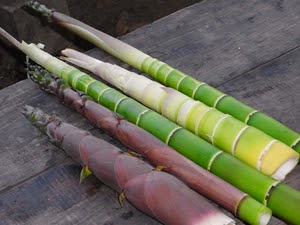
You too can grow your own edible bamboo; yes its true, and many do. Our Asian brethren and cistern know how tasty this exotic side dish can be. You do, however need to take a few precautions because when cyanide is involved, well, bad things can happen. Tips for growing this unusual, delightful and delectable addition to the western garden are spelled out for you, right HERE:


Do you believe in minding your P's and Q's? Here at the shed we pretty much tend to ignore Q's except during scrabble-thons or words with friends. P's, or more accurately, peas, have our undivided attention. And what do peas want to be productive garden denizens? A little sun, a bit of compost, some nitrogen fixin' bacteria and water. AND good neighbors! To find crop enhancing companion plants to bolster your pea patch, simply click HERE:


Somewhere on this ball of rock hurtling through the void there might be a serious gardener without a compost heap to his or her credit. I've never met one, and don't actually wish too. Compost is probably the single most important component in a successful garden plot. Moderating PH levels, improving tilth, attracting earthworms, providing nutrients, forming a superior mulch; compost does all of this for the gardener, and more.

There are of course right and wrong ways to go about composting. Let Glory Lennon, award winning author of "Glory's Garden" teach you the correct way to go about it. She does so right HERE: 

Onions, everyone seems to like them, and they can be used in so many ways. But have you ever wanted to grow a truly ginormous onion? One that stops browsers in their tracks at the county fair? Well here is a blueprint for success in gigantic onionry.

There are however a few updates since the original article was written:

Ailsae onions are no longer as rare as once they were, both plants and seeds are now widely available in the US.

The admonition about mulching with grass clippings remains true - however a mulch composed of well aged sifted compost made by the "hot" or "fast" process to kill all weed seeds is highly recommended.

Following these instructions will result in large onions indeed. The Brits, who apparently care about such things, stress that to grow a potential world record breaker strictly controlled green house methods alone will get the job done. For the rest of us the great outdoors is just fine:

With that out of the way, for humongous onions, click HERE: 

Not satisfied with taking home the blue ribbon for biggest onions? You want the tomato award as well? Let us see what we can do to help you out. Just click right HERE:  


Hmmmm. Someone seems missing from the usual cast of characters here at the shed today. Who could it be? I'm here...Leatherface is cutting firewood...Delacroix is cleaning that big ass rifle...Uncle Mac, passed out on the hay bales, snoring. Kinda sounds like a chain saw with a bad carburetor, doesn't he? Jack is researching a "Dead from the Shed" post. Aunt Agnes - why is Aggy still here, anyone? Hmmm? Well anyway Aggy is getting herself outside of a quart of Jack Black.

The critters? Dire and Nero are trying to imitate nice dawgies...Mrs. BobKat is sleeping in the rafters...Blinky scooted past with a dead chipmunk just a few seconds ago...Oh I know! No Clem! No garden worth its parsnip should be missing Clem! Clem who? Clematis of course. Here once again is Glory with the Queen Clematis story.


Pole beans or bush beans, that is the question. Here at the Shed we love 'em both and grow both types every year. But for the first time gardener there may well be good reason to go with bush beans. We are happy to give you our two cents worth about that, right HERE!


So you've built your raised beds, added rich garden soil and compost, is there anything else that could make this splendid situation even better? Of course there is! Simply invite about a thousand of your best gardening buddies and helpers, the earthworms. Let us tell you why, right HERE!


Well there you have it! A wealth of information at your finger tips, do with it what you will. Until next time, and as always, thank you for visiting Farm Girls Corner! 

Friday, April 6, 2012

FARM GIRL'S CORNER - Talkin' tomatoes


Howdy I'm Farm Girls Aunt Agnes from Texas! Farm Girl is in Minnesota for a little while doin' research on Vikings so I thought I'd stop by and help Uncle Mac while she's gone. Farm girl is always helping Mac all over the place and I figured, heck, I can help that old fool t'il he's bow-legged but he doesn't seem interested. "Guzzle all the beer you want, don't touch my whiskey, don't frighten the animals and stay out of my way." is what he said, a bit rudely it seemed to me. Well his loss...

Farm Girl intended to talk about termaters and she left what she had to say writ down, so I'll let 'er git to it, as it were.

************************************

Tomatoes are the prime bragging crop in most home vegetable gardens and that's true here at the Shed as well. While its pretty easy to grow tomatoes generally, it can be a little more complicated to grow a really large crop of juicy tomatoes with at least a few "take me to the Fair" giants among them.

A good deal of the important work can be done during fall clean up, leaving you with less to do in spring.

Tomatoes love to send their roots deep and wide and its to the gardeners advantage to help them do so. One way is to decide which beds will be holding tomatoes the following season and actually dig them out, more than a shovel's length, perhaps two feet deep or more if you have the inclination, (or perhaps a couple of teen aged sons who want something from you).

Take the opportunity to replace the boards to the raised bed if they are deteriorating, perhaps with two by ten lumber this time instead of two by six, or better still with the semi logs you split yourself which can be any size you wish. (to find out how easy this actually is, look HERE.)

Then fill the bed back up with a mix of organics and the soil which you removed. Whats good? any left over compost you have should be tossed in. Mac likes to take oak leaves and straw, lay it on top of a patch of lawn grass he let get tall, and then mow the mass slowly, collecting the chopped mix in a catch bag, then laying it out and chopping it again.

This gets mixed in with the returning soil and places potential tomato nutrients with the reach of the worms and microbes who will act upon converting them into a form that tomato plants can best utilize. Mac also likes to sprinkle in some green sand, crushed eggshell and bone meal, but generally avoids boosting nitrogen as the grass and compost will already be providing that, and he will be adding more compost in spring.

Once the bed has been refilled it should appear to be over filled, and that is fine, it will settle over the winter months.

In spring, all we do is add in a bit more compost, sifted, and turn it into the soil - only one spades depth this time. Keep turning the soil ever few days while the weather warms, this suppresses weeds and also exposes all kinds of grubs to the birds, who will happily gobble them up.

We never plant our tomato plants, usually from seeds we've started but sometimes with purchased plants, before May 15th. (We're on the cusp of zones 5 and 6). this gives us warm soil and adequate warm nights, and large "seedlings" to plant. We always plant them with a good part of their stems underground, roots spring forth from the buried stems and help grow an stronger, healthier, ultimately more productive plant.

We are growing three varieties of main season, large tomatoes and this one is "Brandywine", a widely available open pollinated type known for its large, flattened fruits and delightful tomato taste. Brandywine is indeterminate and really benefits from staking, the plants grow quite large. As with all the larger tomato types it is a good idea to pinch off the suckers - excess branches - so that most energy goes into growing tomatoes, not greenery. We expect tho pick these starting in mid July.


Like Brandywine, the Old German tomato is an heirloom, open pollinated indeterminate variety, producing large beefsteak style fruits that can run from tradition crimson in color to nearly gold, both inside and out.

We have never tried this variety, here at the Shed but we have heard good things. We'll be taking pictures and keeping everyone advised of their progress throughout the season.

Both of these varieties are widely available, we happened to get our seeds from the Territorial Seed Company.


If there is a knock against either the Brandwine or Old German tomato it is that they are not the most prolific of producers, although we have always found the yield from Brandywine to be more than adequate.

W. Atlee Burpee Seeds proclaims that our final choice, the exclusive Burpee Big Daddy, is a powerhouse producer of 1 lb. fruit. 

This is the only hybrid tomato plant which we are growing this year, and likely the last on ever, as we are moving to a "seed saver" program next season. We simply wanted to see if this much ballyhooed newcomer would live up to its advanced press. As it has been developed from the widely grown "Big Boy" plant we feel that it just might; we have always had great success with Big Boys.

Once the plants are in the ground and established, we weed them scrupulously, and then cover the soil with a 2" thick carpet of sifted compost to retain moisture and keep the soil cool, and also to keep earthworms near the surface doing their wormly duties. (for more on this, go HERE). After they have been growing for a month or so we give them a side dressing of powdered eggshell - calcium- and of Epsom Salt - magnesium. A good dousing with sea food emulsion is also in order, perhaps a week after the side dressing.

Other than that it is simply a case of keeping up with the staking and water supply and waiting for nature to take its course. Stick with us for further updates on the progress of the tomato patch, and as always, thank you for visiting Farm Girls Corner!